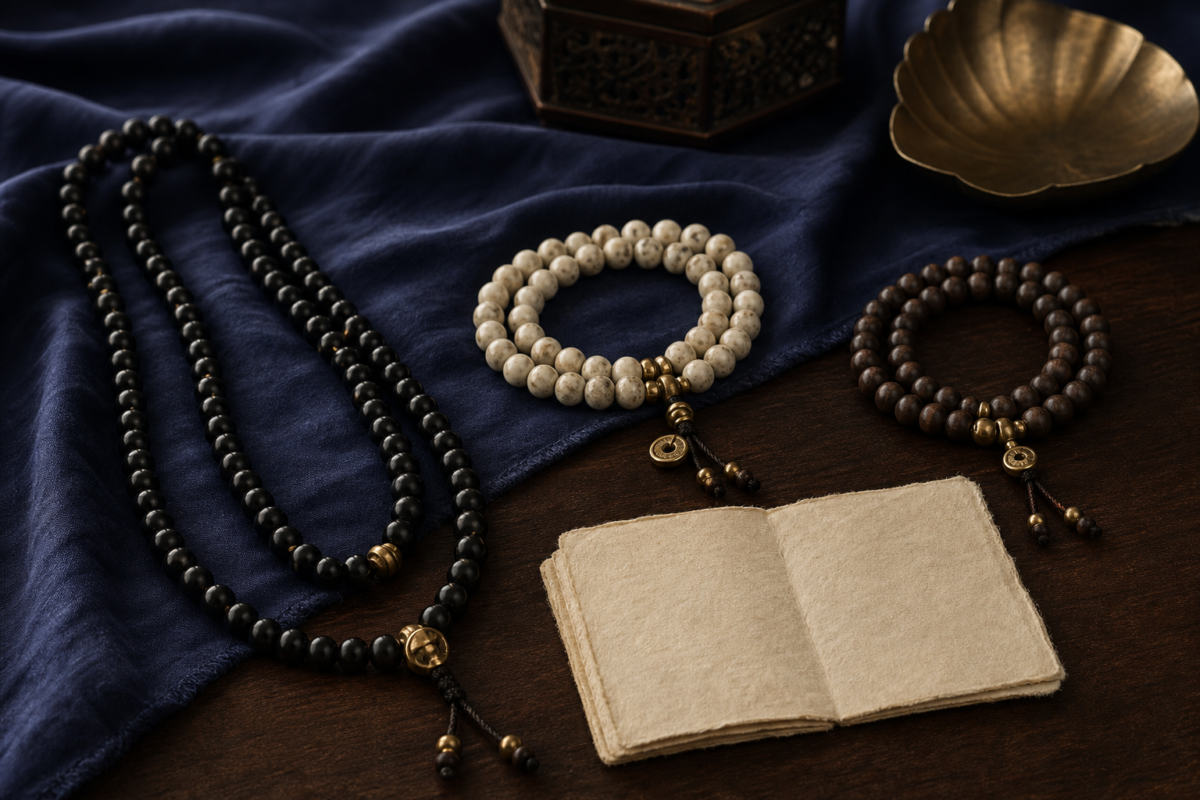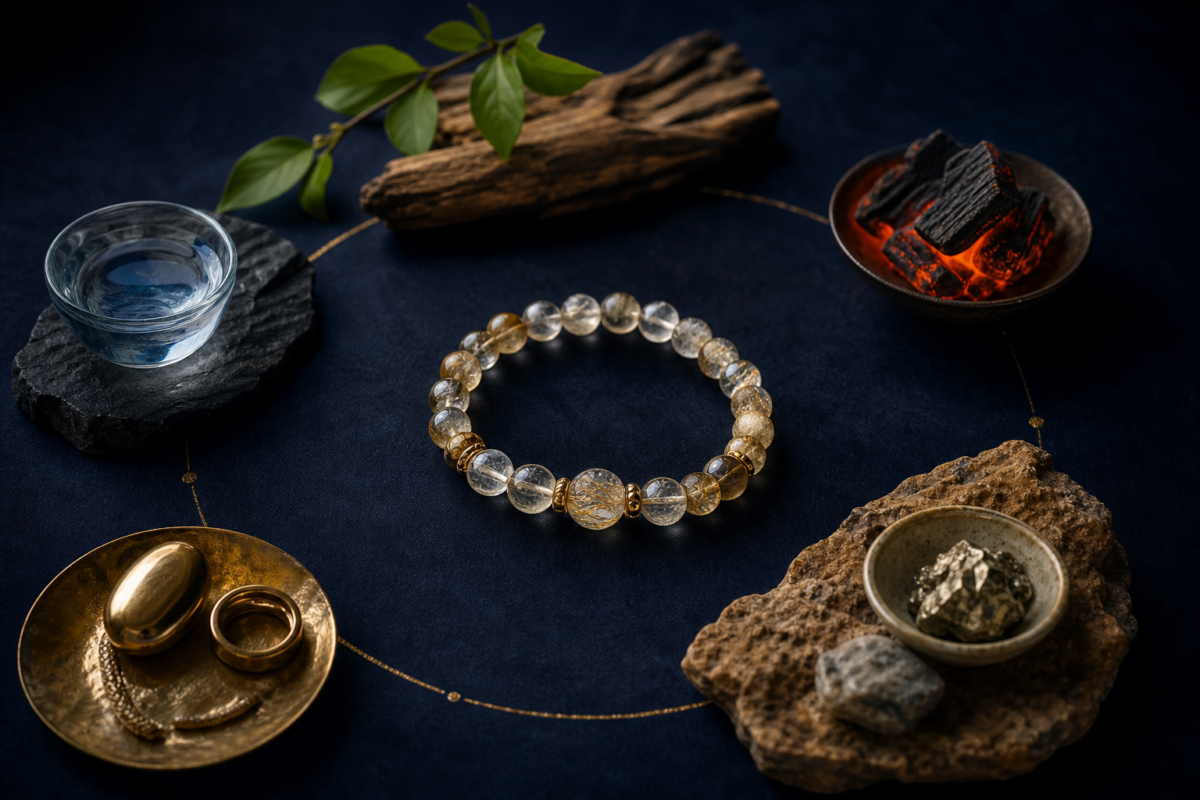

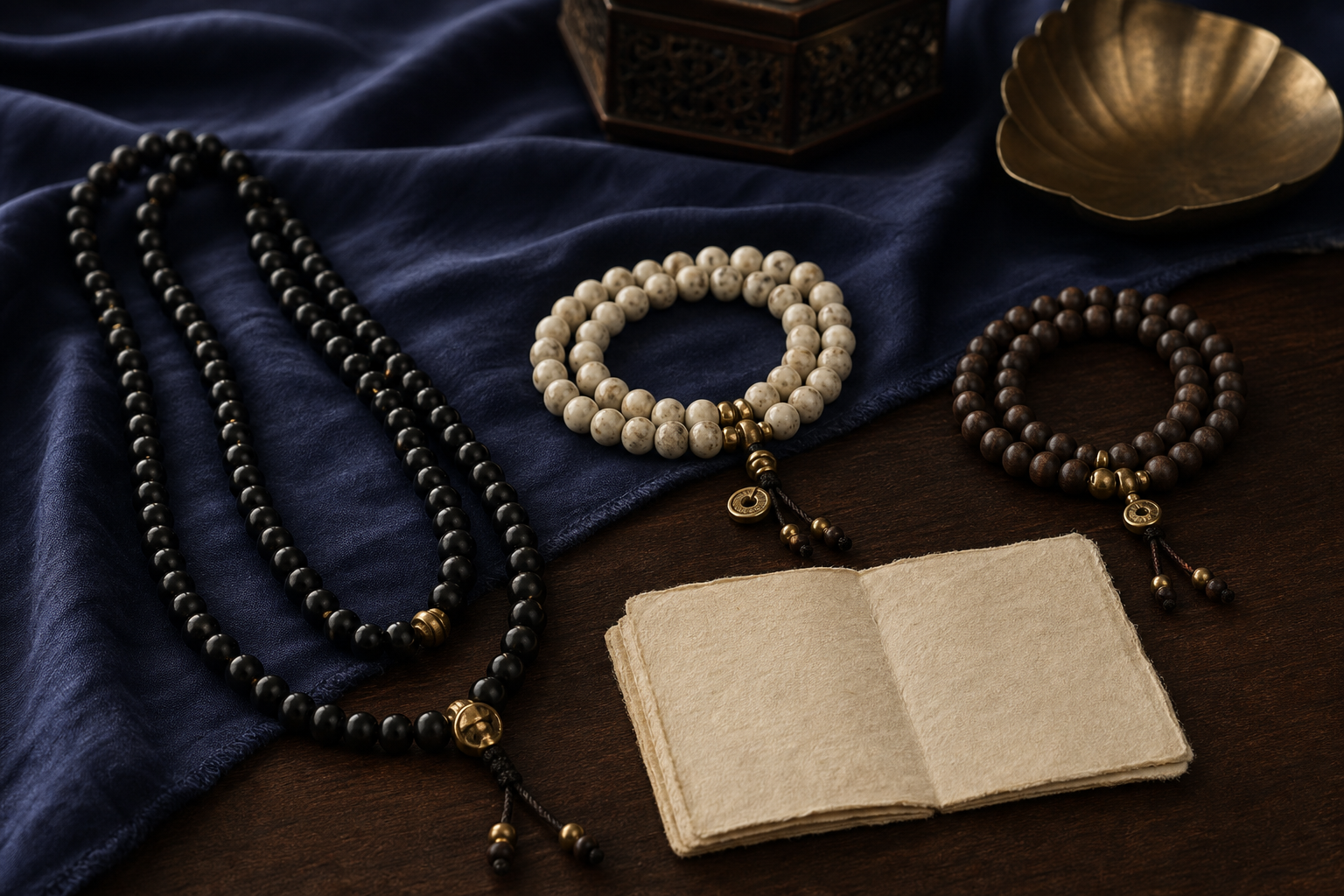
A strand of beads is both an object and a sequence. Its meaning emerges one bead at a time: touch, count, breathe, continue. Across Buddhist, Taoist, and regional folk traditions, different bead counts developed to support recitation, memory, ritual, and personal reflection.
There is no single universal dictionary for these numbers. Meanings can vary between schools, lineages, regions, and modern makers. Understanding the most familiar counts is therefore less about rigid rules and more about seeing how practical design and symbolic thought meet.
108 beads: the complete cycle
The count of 108 is widely associated with Buddhist malas. Explanations differ: some relate it to categories of human affliction, while others connect it with broader cosmological or teaching structures. In practice, a 108-bead strand provides enough length for sustained recitation and can be worn as a long necklace or wrapped around the wrist.
Because the strand is long, material choice matters. Smaller, well-polished beads reduce weight, and a marker or guru bead helps the hand recognize the end of a cycle without looking.
54 and 27 beads: divisions of a whole
Fifty-four is half of 108, and 27 is one quarter. These counts preserve a relationship to the full mala while creating a more compact object. A 27-bead strand can be counted four times to complete 108 repetitions, making it practical for travel or discreet daily use.
Contemporary bracelets sometimes adapt these counts according to bead size and wrist circumference. When the exact number is important to the wearer, designers may use smaller beads, additional loops, or a counter attachment rather than forcing an uncomfortable fit.
18 beads: a wearable reminder
Eighteen-bead bracelets are common because the count often sits comfortably around the wrist with medium-sized beads. Symbolic interpretations vary, including references to sets of teachings or qualities. In everyday jewelry, the appeal is also straightforward: the bracelet is easy to wear and each bead remains distinct to the touch.
14 beads: compassion in daily life
Fourteen appears in some Buddhist contexts and is frequently used in modern bracelets. Makers may connect it with teachings on compassion or protective intention, though the specific explanation depends on tradition. Its compact scale works well for larger stones and layered styling.
Markers, focal beads, and spacers
Not every element in a strand is part of the main count. A focal bead may indicate the beginning and end, while smaller spacers divide a long sequence into memorable sections. Decorative charms can add personal symbolism, but they should not make counting difficult if the strand is intended for practice.
Choosing a count for yourself
First decide how the strand will be used. For formal recitation, follow the conventions of your own teacher or community. For a reflective bracelet, comfort and durability may be equally important. Consider bead diameter, wrist size, cord strength, and whether you prefer a continuous elastic strand, an adjustable knot, or a traditional threaded construction.
Most importantly, approach sacred or inherited forms with respect. A bead count does not automatically confer protection, status, or guaranteed results. Its deeper value comes from the attention brought to it. Whether used in prayer, meditation, or ordinary daily wear, the strand becomes meaningful through repeated contact and the intention it helps you remember.